Escapement · A Milo Puzzle
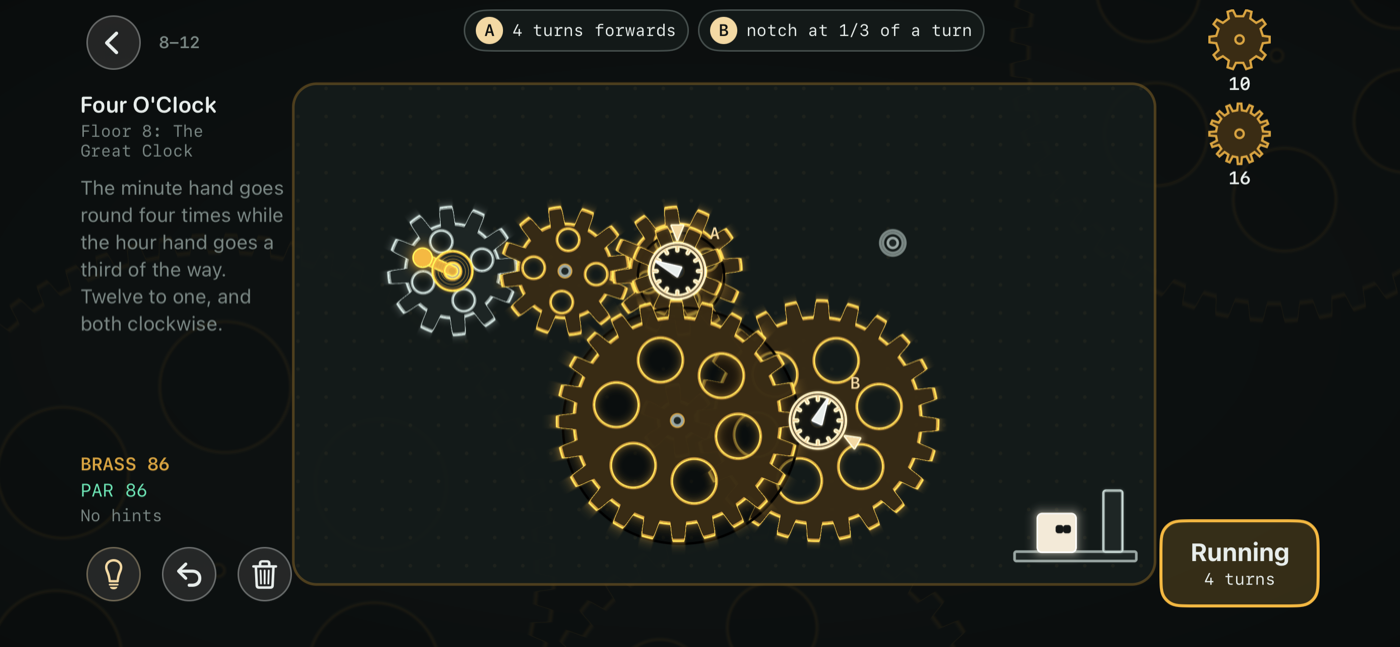
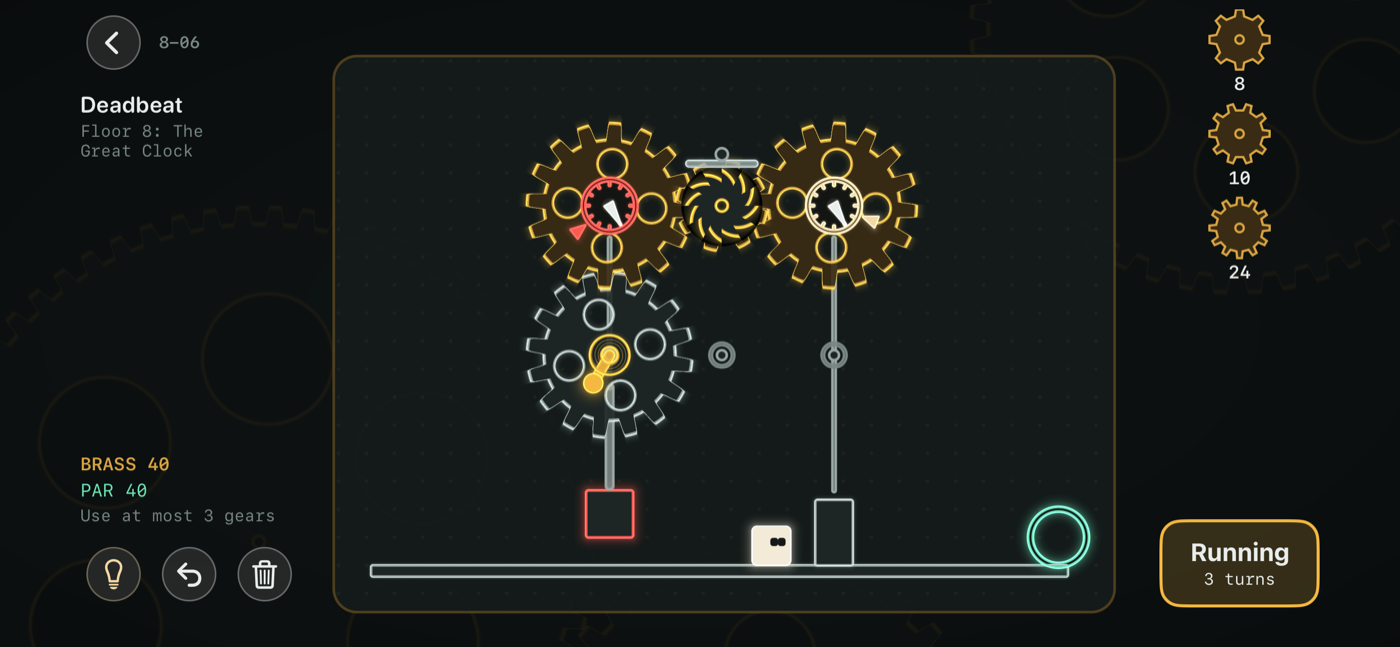
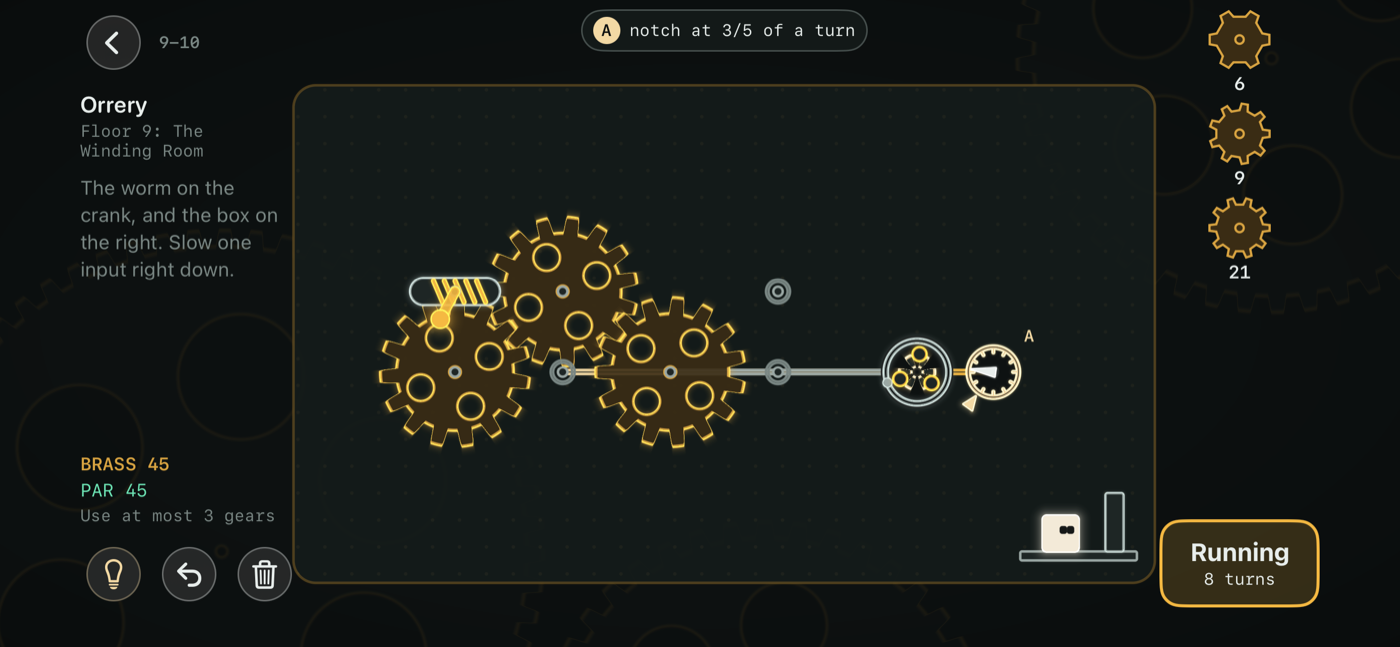
Every level is a board of pegs, a tray of gears and a crank on a mainspring. Put the gears on the pegs, then let the spring go: it turns the crank exactly so far, and every dial your gears reach has to stop exactly where the level asks. Land them all and the door opens for Milo.
Most of the rules fit in a paragraph
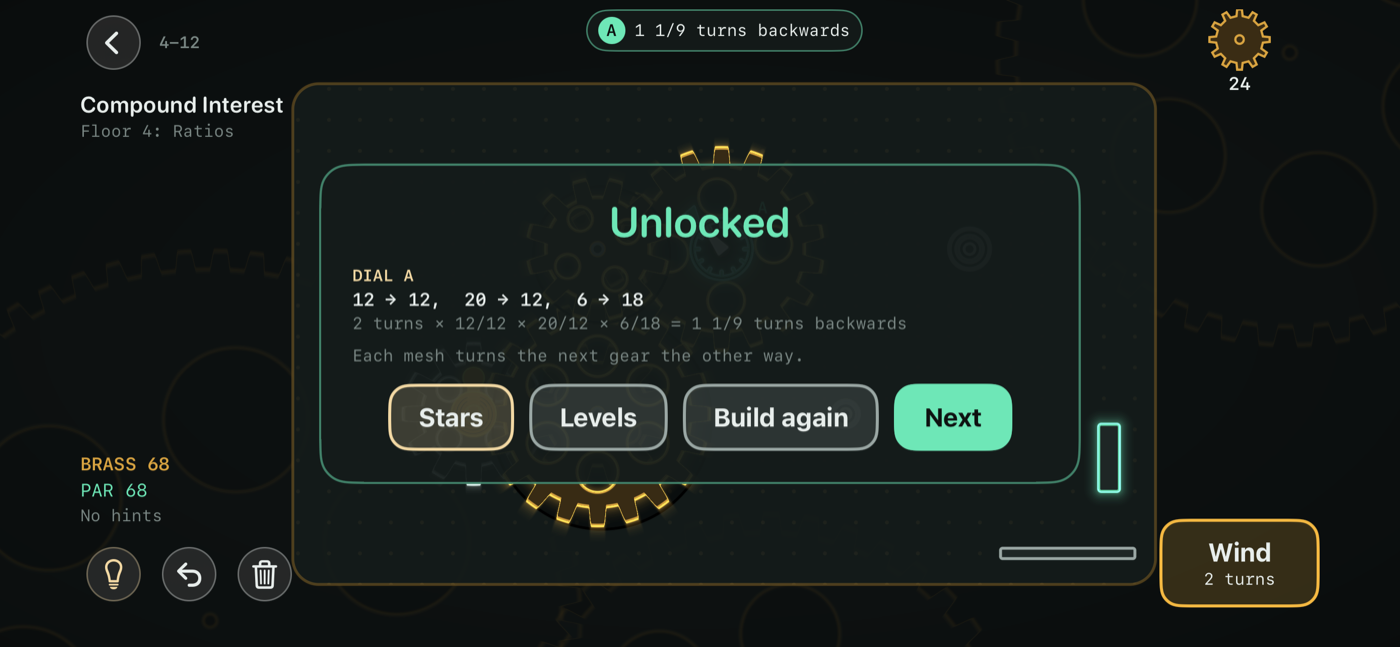
Two gears mesh when their teeth add up to the gap between their pegs, so a twelve and a twenty fit pegs thirty-two apart, and anything closer jams. Every mesh turns the next gear the other way. A gear in the middle only passes the teeth along: it changes which way the last gear turns, never how far. Two gears on one peg turn as one, and their ratios multiply.
That is most of it, and the rest of the game is what you can build with it. You can turn the crank by hand before you wind, to see where things are going. When the spring runs down, a dial is on its mark or it is not — and when it is, the solved card shows you why, gear by gear, from the crank to the lock.
A part a floor
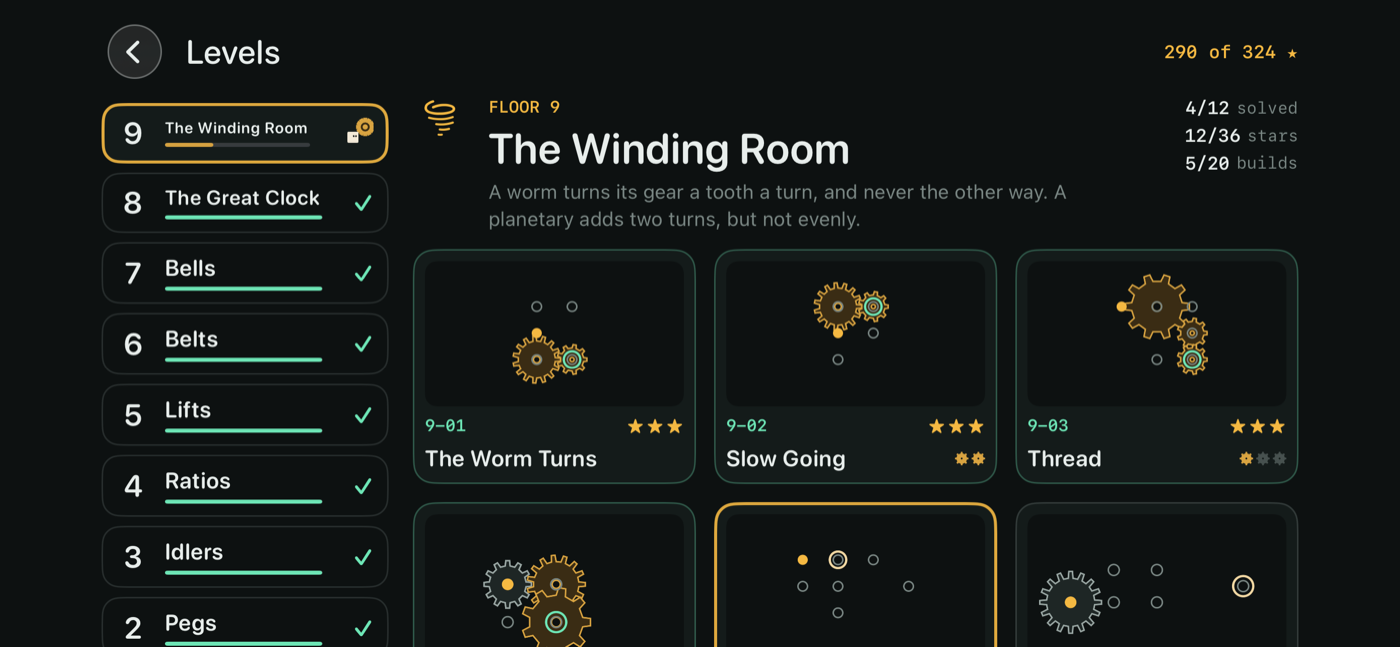
Each level has three stars: one for solving it, one for doing it in as little brass as the cheapest way, and one for its challenge. Many levels can be built more than one way, and the game keeps count of every build you find. Stars and builds dress Milo in hats and coats and cast your gears in new metals.
There is a new machine every day, the same one for everyone. Once you reach the ninth floor, the foundry opens and casts new machines without end.
A lock is on its mark or it is not
The rules are worked in exact fractions, never rounded, so nothing lands a hair off and passes. Before a level ships, a search tries every way its gears could go and proves it can be solved, that its par and its challenge can be met, and how many different builds solve it. The same search runs in the game when you ask for a hint, and it starts from what you have built: first it says which dial is off and by how much, then which peg to change, and last it places the gear itself.
Nothing on the board is a picture. Every gear, dial and belt is drawn by the GPU as it turns, and every sound is synthesised as it plays.